
Stuart Lessels
Enrich Mortgage Group Ltd.-Ontario
Contact Info:
About
Awards and Certifications:

Certified Equifax Credit Professional
Explore Our Services
Preview Our Rates
Access all your mortgage options with just one application. Preview today's rates first:


Blog
Your Bank Sent You a Renewal Letter — Here's Why You Shouldn't Just Sign It
June 22, 2026
Your Bank Sent You a Renewal Letter. Here's Why You Shouldn't Just Sign It
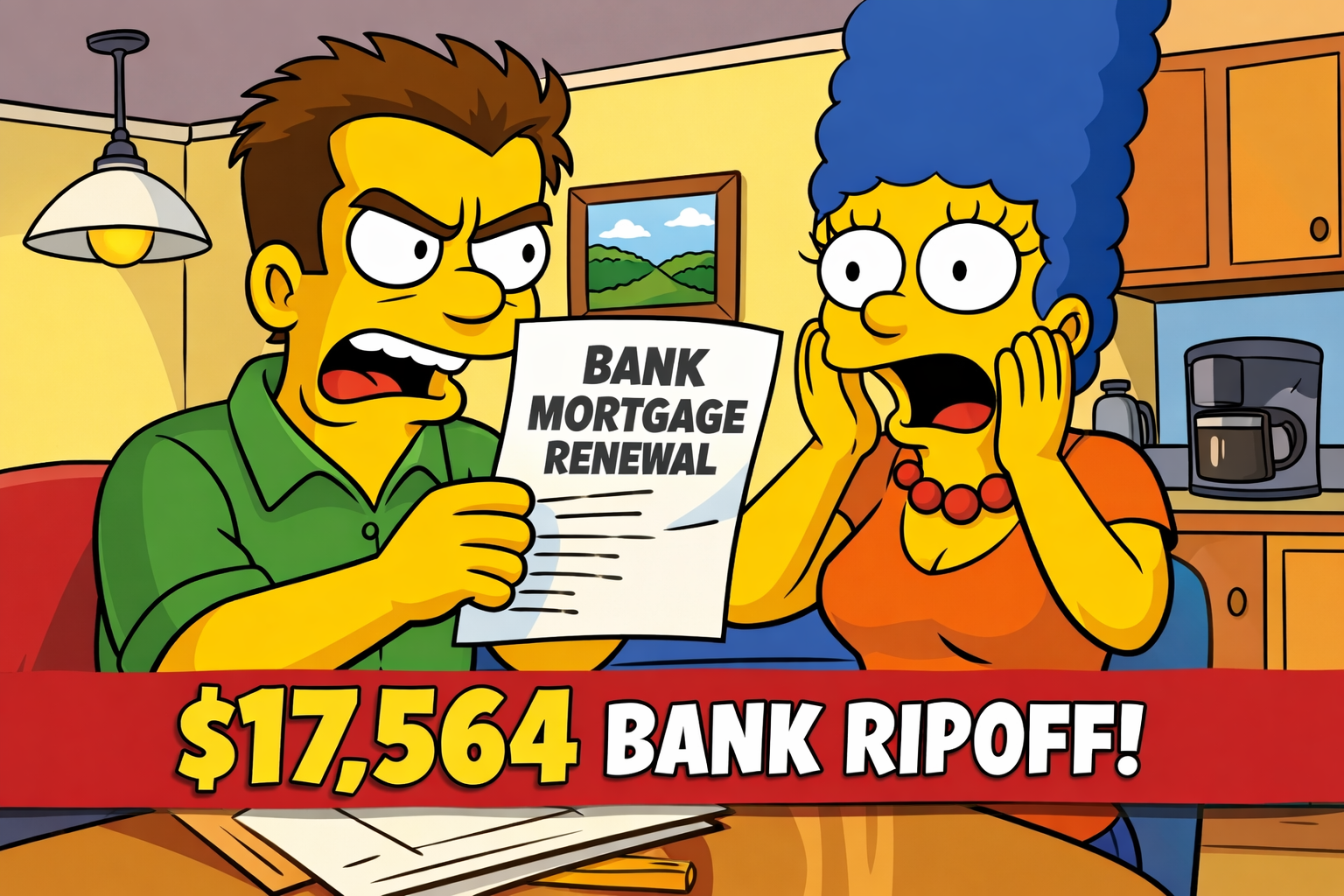
That letter sitting on your kitchen counter? The one from your bank that says "Your Mortgage Renewal"? Before you sign it and move on with your day, read this. Because signing that letter without shopping around could cost you an estimated $17,564. And for a lot of you, it could be even more.
I know what happens. The letter shows up, you glance at it, think "good, that's handled," and you're ready to sign. It feels like the responsible thing to do. Get it done. Move on. But that one signature, made without any shopping, without any comparison, could be the most expensive five seconds of your year.
What Your Bank Is Counting On
Here is a number worth knowing: every single one of the Big 5 banks (RBC, TD, Scotia, BMO, and CIBC) is currently offering roughly the same 5-year fixed rate on their initial renewal letters. Around 5.09%. That is not a coincidence. They are all starting at the same high number because they know that most of their customers will just sign.
This is called captive customer pricing. You are already their client. The mortgage is already on their books. They have very little incentive to offer you the best rate upfront. So they don't. They offer you a rate they know most people will accept, because most people do not shop around at renewal time.
You do not have to be one of those people.
The Rule That Changed Everything
In November 2024, OSFI removed the mortgage stress test requirement for borrowers switching lenders at renewal. If you do not know what that means, here is the short version: before this rule change, even if another lender was offering you a significantly better rate, you might not have been able to switch because you had to re-qualify under a higher test rate. That created a real barrier. Banks benefited from it enormously.
That barrier is now gone. Since November 2024, if your mortgage is up for renewal, you can shop freely, switch lenders if you find a better rate, and you do not have to re-qualify under the stress test. Note that minor admin or discharge fees may still apply depending on your lender, but the stress test itself is off the table. You have far more leverage than you think.
The Math That Should Make You Angry
Let me show you exactly what that gap between bank rate and broker rate looks like in real dollars.
Scenario | Bank Renewal Letter (5.09%) | Broker's Best Rate (4.04%) |
Monthly Payment | ~$2,909/month | ~$2,616/month |
Monthly Savings | - | ~$293/month |
5-Year Payment Savings | - | ~$17,564 |
Extra Equity Built | - | ~$7,589 |
Total Estimated Benefit | - | ~$25,153 |
Rates as of May 2026, subject to change and individual qualification. Numbers are estimates based on a $500,000 mortgage with a 25-year amortization, comparing illustrative bank posted rates to broker-sourced rates. Your savings depend on your specific situation. The principle, however, is the same: do not sign without shopping.
That $293 a month is not a rounding error. That is groceries. Car payments. Your kids' activities. Money that is currently yours, that you would be handing back to the bank every single month because you did not make one phone call.
Variable Rate Renewers: You Might Actually Be Smiling
If you have been on a variable rate mortgage, here is some good news for a change. Based on Bank of Canada data and recent rate movement, variable rate borrowers may actually see their payments decrease by 5-7% at renewal. That is worth a conversation either way, because locking in at the right moment matters. The right rate depends on your timeline, your risk tolerance, and what the rate environment is doing. That is exactly the kind of thing I help people think through.
The 4 Things to Do When Your Renewal Letter Arrives
1.Do NOT sign it. Put it in a drawer. Seriously. You almost certainly have time. Banks typically send renewal letters 90-120 days before your maturity date, which gives you a real window to shop.
2.Call a mortgage broker. In most standard residential mortgage transactions, it does not cost you anything extra. The lender pays the broker's fee. You get the same paperwork, the same process, and often a significantly better rate.
3.Get rate quotes from multiple lenders. A broker compares 30 or more lenders for you in a single conversation. Your bank compares one: themselves.
4.Lock in a rate hold. Most lenders will hold a rate for up to 120 days. That means you can lock in a competitive rate now, continue shopping if you want, and be protected if rates move upward.
Why a Broker Beats Your Bank Every Time at Renewal
Think about what your bank is doing when they send you that letter. They are comparing their rate to nobody. They have one product. One rate sheet. One agenda: keep your mortgage on their books at the most profitable rate they can get away with.
A mortgage broker compares over 30 lenders: banks, credit unions, monoline lenders, and trust companies. We have access to rates and products your bank will never offer you. In most standard residential mortgage transactions, it does not cost you anything extra to use a broker. Same paperwork. Better rate. More options. More leverage.
And here is something I see every week in my practice: clients who used their bank for their first mortgage simply because it was easy. Now, at renewal, when they find out what a broker can do for them, they are genuinely surprised. Not because it is complicated. Because nobody told them.
I am telling you now.
The Bottom Line
If you have a renewal coming up in the next 12 months, do not sign anything yet. It does not matter if your bank sent you a letter that looks official and final. It is not a commitment. It is an opening offer. And the answer to an opening offer is always: let me shop around first.
Head to HouseNow.ca. I will run the numbers for your specific mortgage, show you what is actually available in the market right now, and help you keep that estimated $17,564 where it belongs: in your pocket, not theirs.
If you know someone with a renewal coming up, forward this to them. That one share could save them thousands of dollars.
Stuart...
Bank of Canada Holds at 2.25% — Here's What That Actually Means for You
May 02, 2026
Bank of Canada Holds at 2.25% — Here's What That Actually Means for You
So the Bank of Canada just made its latest rate decision. And if you have a mortgage — or you're even thinking about getting one — you're going to want to read this.
I promise I'll keep it simple.
Here's the short version: they didn't change a thing. The overnight rate stays at 2.25%. But what the Governor said matters a whole lot more than what he did. Let me explain.
What the Bank of Canada Actually Did
On April 29, 2026, the Bank of Canada held its overnight rate at 2.25%. That's the rate that drives what you pay on variable mortgages, lines of credit, and a bunch of other stuff.
Think of the overnight rate like a thermostat for the economy. When the Bank raises it, borrowing gets more expensive and spending slows down. When they lower it, money gets cheaper and people spend more. Right now, they're saying the temperature is just right.
But here's the thing — "just right" doesn't mean "forever." It means "for now."
Why Macklem Said "Nimble" — And Why That Word Matters
Governor Macklem called the current rate "about right." Cool. That's reassuring. But then he added one word that caught my attention: nimble.
When a central banker says they need to stay "nimble," that's code for: "We're comfortable today, but the world is unpredictable and we might need to move fast."
And honestly? He's right to be cautious. The Canadian economy is doing pretty well. Jobs are decent. People are spending. But look around globally — the war in Iran is pushing energy prices around, and US trade policy keeps throwing curveballs at Canadian businesses. Those are wild cards that could change things quickly.
Translation? Enjoy the stability. But don't assume it's permanent.
What This Means If You Have a Variable Rate
Deep breath. You're fine.
If you're on a variable-rate mortgage, your payments shouldn't be going up. The rate held. The prime rate stays at 4.45%. Nothing changes on your next payment date.
Right now, variable rates are sitting around 3.3–3.8% with a discount, which is actually really competitive. If you locked into a variable in the last year, you're in a solid spot.
Should you stay variable or lock into fixed? That depends on your situation. But here's the thing — with Macklem using the word "nimble," nobody can promise you rates won't move at the next announcement (June 10, by the way). If predictability matters to you, let's talk about your options.
What This Means If You're Renewing Soon
Okay, this one's big. And here's why.
1.2 million Canadians are renewing their mortgages in 2026. That's a massive wave. If you're one of them, you're not alone — but you also can't afford to wait until the last minute.
Here's what a lot of people don't realize: you can usually start your renewal process 120 days before your maturity date. That means you can lock in a rate now while things are stable, and if rates drop before your renewal date, many lenders will let you take the lower rate anyway.
It's kind of like getting a price-match guarantee. You lock in today's rate as your safety net, but you get to benefit if things improve. Why wouldn't you do that?
Current 5-year fixed rates are around 3.9–4.3% depending on your situation. That's historically very reasonable. Don't sleep on this.
What This Means If You're Looking to Buy
If you're sitting on the sidelines waiting for the "perfect" time to buy — I get it. But here's what I tell every buyer: the perfect time is when you're ready and the numbers work.
Right now, housing activity is a bit soft. That's actually good news for buyers. Less competition. More negotiating power. Sellers are a little more motivated.
And with rates stable, you can get pre-approved and know exactly what your payments will look like. No surprises. Pre-approval is your superpower in this market — it tells sellers you're serious and it gives you a clear budget to work with.
The window is open. I don't know how long it stays open. Get pre-approved now and you'll be ready when the right place comes along.
The Sneaky Thing About Fixed Rates Right Now
Okay, this is the part most people miss. And honestly, it's the reason I wrote this whole post.
The Bank of Canada held rates. So fixed rates should be staying the same too, right? Wrong.
Here's a little secret about fixed rates: they're not actually tied to the Bank of Canada's overnight rate. Fixed rates are driven by bond yields — specifically, the 5-year Government of Canada bond.
Think of it this way. Variable rates follow what the Bank of Canada does today. Fixed rates follow what the bond market thinks will happen over the next five years. They're looking into the future.
And right now, bond yields have been creeping up. Why? Because of global uncertainty — the Iran conflict, trade tensions, inflation expectations. Bond investors want a higher return for the risk, so yields go up. And when bond yields go up, fixed mortgage rates go up with them.
So here's the sneaky part: fixed rates are actually rising slightly right now, even though the Bank of Canada didn't raise anything.
This catches people off guard. They hear "rate hold" and assume everything stays the same. But if you're looking at a fixed rate, the price might be a little higher next month than it is today. Something to think about.
What to Watch Next
The next Bank of Canada rate announcement is June 10, 2026. Here's what could push them to make a move:
- Inflation: It's running near 3% right now, which is a bit above their 2% target. They expect it to come back down to 2% by early 2027. If it doesn't, they might raise rates.
- The economy: GDP is forecast at 1.2% growth in 2026 — not terrible, but not exciting either. Unemployment is sitting around 6.5–7%. If things weaken, they might cut.
- Global wild cards: The Iran conflict, US tariffs, energy prices. Any of these could change the math quickly. That's why Macklem wants to stay "nimble.
I'll be watching all of this closely and I'll break it down for you again after the June announcement.
The Bottom Line
Rates held. Stability is here — for now. But "nimble" means things could shift, and fixed rates are already sneaking up on their own.
Whether you're on a variable rate, renewing soon, or looking to buy — the smartest move right now is to talk to someone who can look at your specific situation and give you a real answer. Not a generic headline. A real plan.
That's what I do. Reach out anytime and let's figure out your best move together.
Stuart...
Stuart Lessels
Mortgage Broker, Collingwood ON
(705) 445-1234
Why Fixed Mortgage Rates Are Rising in Canada
March 19, 2026
THE BANK OF CANADA HELD RATES… SO WHY ARE FIXED MORTGAGE RATES RISING?
By Stuart Lessels, Your “Go To” Mortgage Broker for Georgian Bay and Beyond
If you’ve been watching the news, you probably saw the headline:
“Bank of Canada holds the overnight rate at 2.25%.”
And if you’re like most people, you probably thought:
“Great! That means mortgage rates won’t go up… right?”
I wish it worked that way. I really do. But here’s the part the headlines don’t explain — and the part that actually matters for your mortgage:
Fixed mortgage rates don’t follow the Bank of Canada.
They follow something much more boring… Something your parents probably talked about at the dinner table… Something you might have ignored because it sounded like “grown‑up money talk.”
Bonds.
Yes — those safe, steady, “boring” investments your parents loved.
And right now?Bond yields are rising. Which means fixed mortgage rates are rising, even though the Bank of Canada didn’t touch its rate.
Let’s break this down in plain English — no jargon, no corporate speak, just the truth you need to make smart decisions.
⭐ Why the Bank of Canada Held Rates This Week
On March 18, 2026, the Bank of Canada kept the overnight rate at 2.25%.
Why?
Because the economy is soft:
- GDP shrank last quarter
- Unemployment is up
- Exports are weak
- The labour market is cooling
- Consumers are slowing down
At the same time, inflation has been easing — down to 1.8% in February — but rising energy prices are expected to push it back up.
So the Bank of Canada is stuck between:
- Weak growth
- Higher energy‑driven inflation
- Global uncertainty
Holding the rate was the safest move.
But here’s the twist…
⭐ If the Bank held rates, why are fixed mortgage rates rising?
Because fixed mortgage rates don’t follow the Bank of Canada.
They follow bond yields.
And bond yields are rising because:
1. Global conflict is pushing energy prices up
Oil and natural gas prices have jumped. Gasoline is more expensive. Shipping costs are rising. This increases inflation expectations.
2. Investors want higher returns
When the world feels risky, investors demand more return for their money. Higher risk = higher yields.
3. Global bond markets are tightening
Bond yields in the U.S. and Europe are rising. Canada follows.
4. Financial markets are nervous
Equity markets are down. Credit spreads are wider. Money is moving into safer assets — and that pushes yields up.
5. Rising yields = rising fixed mortgage rates
This is the part most people don’t know.
When bond yields rise, fixed mortgage rates rise. It’s that simple.
⭐ So what does this mean for you?
If you’re renewing in the next 12–18 months
This is your moment to get ahead of it. You don’t have to wait for your renewal letter. You can build a plan now — for free.
If you’re buying
Fixed rates may continue to rise if bond yields keep climbing. A pre‑approval protects you.
If you’re in a variable rate
Your payment isn’t affected by this announcement — but your fixed‑rate conversion options might be.
If you’re feeling overwhelmed
You’re not alone. This stuff is confusing — and that’s why I’m here.
I work with over 260 lenders, and my job is to help you find the best fit, even if it ends up being your current bank.
⭐ The simple takeaway
The Bank of Canada held rates. But fixed mortgage rates are rising because bond yields are rising.
It’s not you. It’s not your bank. It’s not the news. It’s the bond market — the quiet engine behind fixed mortgage rates.
And now you know.
If you want a free plan for your renewal, your purchase, or just to understand your options, I’m here.
Stuart Lessels
Your “Go To” Mortgage Broker for Georgian Bay and beyond
📞 (705) 445‑1234

Did You Train for Your Mortgage?
March 06, 2026
Did You Train for Your Mortgage — Or Did You Just Show Up?
The Olympics just wrapped up.
We watched athletes win gold by fractions of a second. Silver decided by inches. Bronze earned by resilience and grit.
But here’s what most people miss:
Gold isn’t won on the day of the event.
It’s won in the training:
- The years before.
- The preparation.
- The micro-adjustments.
- The coaching.
- The timing of the peak.
Now let me ask you something uncomfortable:
When it came to your mortgage…
- Did you train for it?
Or did you just show up and sign what was handed to you?
The Mortgage Event vs The Mortgage Training Cycle
Most Canadians treat their mortgage like an event.
- You buy a house.
- You renew when the letter shows up.
- You refinance when someone suggests it.
- You sign when the rate looks “good.”
That’s event thinking.
Olympic athletes don’t think that way.
They think in cycles.
- Build.
- Refine.
- Adjust.
- Peak.
- Review.
- Prepare for the next cycle.
A mortgage should be treated the same way.
It’s not a one-time decision.
It’s a structured performance plan tied to your life.
Bronze: Showing Up Without Training
Let’s start here.
A bronze mortgage isn’t “bad.”
It’s reactive.
Bronze looks like this:
- You auto-renew because it’s easy.
- You chase the lowest advertised rate.
- You never review penalty structure.
- You don’t compare lender flexibility.
- You don’t know your prepayment privileges.
- You’ve never stress-tested your options.
It feels fine.
Until life changes.
- A job shift.
- A separation.
- A move.
- An investment opportunity.
- A rate drop.
And suddenly your “great rate” comes with a $28,000 penalty.
That’s not because you’re careless.
It’s because you didn’t train for the scenario.
Olympic athletes don’t just train for perfect weather.
They train for adversity.
Your mortgage deserves that same discipline.
Silver: You Compared — But Didn’t Optimize
Silver is where most responsible homeowners land.
You looked at rates. You asked a few questions. You felt informed.
That’s better.
But silver often means:
- You optimized for today.
- You didn’t model year 3.
- You didn’t model break cost.
- You didn’t model renewal behaviour.
- You didn’t plan your next peak.
Silver mortgages work.
Gold mortgages are structured.
And structure is where the real performance lives.
Gold: Training With a Plan
A gold medal mortgage isn’t about the lowest rate.
It’s about alignment.
It’s built intentionally around:
- Your income structure.
- Your career trajectory.
- Your family plans.
- Your investment goals.
- Your risk tolerance.
- Your timeline.
Gold includes:
- The right term (not automatically five years).
- The right lender appetite for your profile.
- The right prepayment privileges.
- The right penalty math.
- The right portability rules.
- The right renewal leverage.
- The right flexibility if you need to pivot.
Gold isn’t shiny.
Gold is strategic.
Why the Bank Model Isn’t Built for Gold
This isn’t about attacking banks.
Banks are excellent institutions.
But here’s the structural reality:
A bank employee can offer you:
- Their rate sheet.
- Their underwriting box.
- Their penalty structure.
- Their renewal behaviour.
- Their product shelf.
Only theirs.
That’s one lane.
If Olympic athletes only trained one muscle group, they wouldn’t win.
A single-lender conversation can’t produce full optimization because you never saw competing structures.
It’s not wrong.
It’s limited.
Gold requires a stadium view.
The Hidden Variables Most People Never Train For
Ask yourself honestly:
Do you know:
- Whether your mortgage is collateral charged?
- How your IRD penalty is calculated?
- What breaking it would cost today?
- Whether it’s portable?
- How aggressive your lender is at renewal?
- How your lender treats self-employed income?
- What happens if you need to refinance quickly?
Most homeowners don’t.
That’s not ignorance.
It’s lack of coaching.
Athletes don’t guess their form.
They have someone reviewing tape.
Your mortgage deserves that level of scrutiny.
The Peak Timing Problem
Olympic athletes peak at the event.
Most homeowners peak at the wrong time.
They:
- Lock in at the wrong rate cycle.
- Choose a term misaligned with life changes.
- Accept renewal offers without leverage.
- Miss windows to refinance strategically
You don’t want to peak randomly.
You want to peak intentionally.
If rates are trending down, your structure matters. If you might move, portability matters. If you’re investing, flexibility matters. If income fluctuates, lender appetite matters.
Rate is one variable.
Structure wins championships.
Renewal Is Your Next Olympics
If your mortgage renews in the next 12–24 months, this is your training window.
Here’s what gold preparation looks like:
- Review credit now.
- Reduce revolving balances.
- Understand loan-to-value.
- Model refinance vs renewal.
- Compare lender categories.
- Evaluate penalty math.
- Build leverage before the letter arrives.
Auto-renewal is showing up without training.
Preparation is stepping onto the podium intentionally.
The Role of a Mortgage Coach
Olympic athletes don’t train alone.
They have:
- A coach.
- A strength specialist.
- A strategy team.
- A performance plan.
Most homeowners have:
- A rate quote.
That’s not coaching.
A mortgage coach:
- Anticipates risk.
- Models scenarios.
- Designs exit strategy.
- Thinks in cycles.
- Plans the next renewal before this one closes.
That’s how you move from silver to gold.
The Real Question
It’s not:
“Is my rate good?”
That’s surface level.
The real question is:
Did I train for this mortgage — or did I just show up?
If your mortgage was:
- Compared across lenders,
- Structured intentionally,
- Stress-tested for life changes,
- Aligned with your next 3–5 years,
- Designed with flexibility in mind…
You trained.
If you signed because it was easy…
You showed up.
No judgment.
Just clarity.
Final Thought
Gold medals aren’t won by accident.
- They’re built in silence, long before the crowd cheers.
- Your mortgage is likely the largest financial decision of your life.
- It deserves preparation.
- It deserves structure.
- It deserves coaching.
If you want to know whether your current mortgage is gold, silver, or bronze — and what it would take to upgrade — let’s build your plan properly.
Stuart
Your "Go To" Mortgage Broker for Georgian Bay and Beyondstuart@housenow.ca
(705) 445-1234

Stay Connected
Subscribe to our Newsletter and you'll stay up to date on rates that help you save thousands in interest.